by Alice Fairhurst
Evolution of the Music Industry
The music industry has undergone change overs the years moving away from hardcopy formats such as cassettes, CD’s and vinyl to digital formats (downloads, streaming and the use of social media). This is known as the “digital revolution” (Rogers, 2013: 4).
The emergence of the digital era was due to the launch of Napster in June 1999, an unauthorised, online peer-to-peer file sharing site founded by Shawn Fanning. The site enabled users to share and digitally download their music via MP3 format without the permission of the artists who owned the songs meaning Fanning was culpable of copyright infringement. An increase in digital downloads meant a decrease in sales of physical copies. These “file-sharing activities [were] having a detrimental effect on recorded music sales” (Rogers, 2013: 156) and were “terminally wounding the record industry” (Rogers, 2013: 195).
The industry initially aimed to sue anyone taking part in these illegal sites, however, once this change was accepted, it was essential they moved with the times. Apple launched iTunes in 2003 (the first legal music service) alongside the iPod; this was the brands USP (Unique Selling Point) distinguishing them from other music download sites. Consumers place more value on tangible objects and will buy them.
Ways To Distribute & Promote Your Own Music
Social Media Sites: Instagram, YouTube, Twitter, FaceBook, SnapChat, TikTok
This enables artists to communicate their daily lives with their audience making them more relatable and accessible.
Music Platforms: Spotify, Apple Music, Deezer, iTunes, SoundCloud (premium/ subscriptions available)
In 2018, “streaming revenue grew by 34% and accounted for almost half (47%) of global revenue. That was driven by a 32.9% increase in paid subscription streaming with a combined £5.4 billion being collected. The IFPI states that 255 million people now pay for music streaming services with over 100 million of those people Spotify customers” (Whitby 2019).
Other: Support other artists at gigs, contact online/ physical music magazines such as Bido Lito, Get into This, contact radio- BBC Introducing helps to promote upcoming musicians
According to Ross Graham, radio has “maintained itself in the contemporary music world” (Rogers, 2013: 157).
The Importance of Radio
Willie Kavanagh states that “radio is … absolutely crucial in breaking any new artist or selling any established one” (Rogers, 2013:159). In a personal interview Ben Barrett announced that radio “helps you cross over to an audience that might not as individuals buy a whole lot of records, and it’s access to a big new market” (Rogers, 2019: 164-165); it can aid an unsigned act in reaching a wider audience than they would initially have access to.
Major Labels
The music industry has been dominated by the major companies changing from the “Big 6”…
- Universal music Group
- Warner Music Group
- BMG Music
- Capitol- EMI
- Polygram
- CBS (now known as Sony)
To the “Big 3” which account for “greater than 80% of all sales” (Resnikoff, 2016).
- Universal music Group
- Sony Music
- Warner Music Group
Ross Graham stated that “the majors also have a stranglehold on media control for pushing their artists” (Rogers, 2013: 132), they are vital in emerging an unsigned act into the mainstream of the music industry. The “digital revolution” has eliminated the need for the middle man (gatekeepers, A&R, producers, promoters etc.) so there are more bedroom artists. However, without being on the radio or being signed to a major label, this is very difficult.
Public Relations (PR)
According to the Public Relations Society of America (PRSA) “Public relations is a strategic communication process that builds mutually beneficial relationships between organizations and their publics” (Wynne, 2016) often utilising media, social media and word of mouth.
PR includes:
- Telling a story
- Talking to promotors, gig goers and music consumers
- Nurture and elevate visual identity of artist
- Take into account the length of times it takes to publish for magazines and newspapers
- Know your audience
4 P’s of Marketing
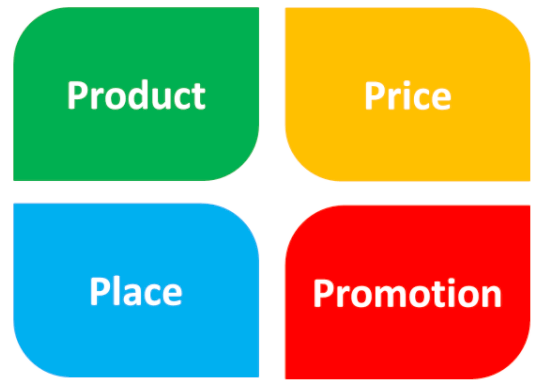
Promotion: Advertising, PR, ticket sales, merchandise primarily through the use of social media. Know the online habits of your fanbase.
Product: This may be the music via physical copies or streaming sites, gig tickets, merchandise or the act themselves. Ensure to target your audience. Know your genre, personal style and visual identity.
Price: “The Product should always be seen as representing good value for money” (Professional Academy). The cost of the acts music, tickets and merchandise should be relative to their level of success and should consider their fanbase, ie. an audience aged 45-50 can typically afford more than a teenage audience.
Place: “The product should be available from where your target consumer finds it easiest to shop” (Professional Academy), this is now primarily through social media via the artists website. The venue for the performers should be representative of their music and audience. The place they promote their music should be on platforms that are most specific to their audience.
How do bands/ artists make revenue
Recording: Marketing, publicity, pluggers, producers, record labels (business of investment- loans money to artist), A&R, distribution, streaming, media (TV, radio, social media), session musicians, cost decreased per unit (except for resurgence of vinyl).
“Performing royalties from radio- play feature as one of a number of core revenue streams” (Rogers, 2013: 162).
Live/ Merchandise: Labels, promoters, venues, artists, festival, staff, stage management, security, tour management, online ticketing, merchandise
“There is much money in live performance” (Rogers, 2013: 116).
Rights/ Copyright: Marketing, publishers, websites, % of money, lawyers, artist advocacy, PRS, advertising agencies, TV, film, Digital Rights Company
Alice Phoebe Lou- A case study
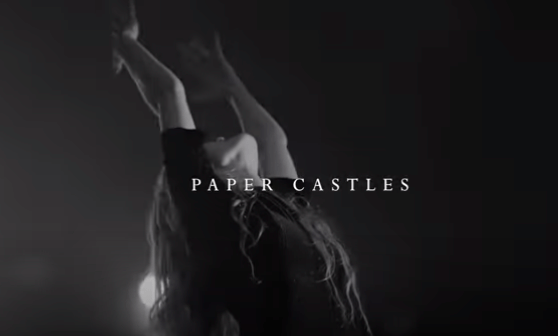
Alice Phoebe Lou is a South African singer-songwriter with jazz, ambient and indie-rock influences. She initially started her career as a street musician and has now expanded her knowledge and fanbase which allows her to run her own business independently.
In terms of social media, Lou uses Instagram the most frequently, uploading photos or updates at least every few days. Her USP is the aura she presents whilst performing, during interviews and via social media. She utilises these platforms as an extension of her visual identity illustrating a genuine artist who loves her music, a feminist and free-spirit. Her authentic representation of herself appeals to her 87.7K followers. Lou uses the bio to link her most recent release. This is the first thing followers/ new followers will see and it will take them straight to her music!
Lou has 115K subscribers on her YouTube channel but has only uploaded 18 videos. With more frequent content, Lou would keep her audience interested on this platform and increase the number of subscribers. In the modern day, there is an opportunity for musicians to be immersed into the mainstream via their YouTube channel and generate sufficient revenue.
Another way Lou utilises her YouTube channel is by collaborating with other artists such as Maisie Williams or with music channels such as Mahogany Sessions enabling her to expand her audience further. Here are some examples of her creative collaborations…
Another opportunity that Lou has taken from her YouTube channel is to create a short documentary for her album “Paper Castles” which was premiered on 1st May 2020. In this documentary, she reveals a lot about her business and the way she works in order to be successful. She states that “touring would be a lot easier if I was on a label and I had a more… commercial setup and structure of the way that I run my business” (Alice Phoebe Lou, 2020) yet she enjoys the freedom of creativity. She also talks about the cycles of touring, promoting an album and songwriting… “This phase is about to come to an end and then I’m gonna be back in creation phase …where I worry less about social media and doing all my own… PR essentially” (Alice Phoebe Lou, 2020).
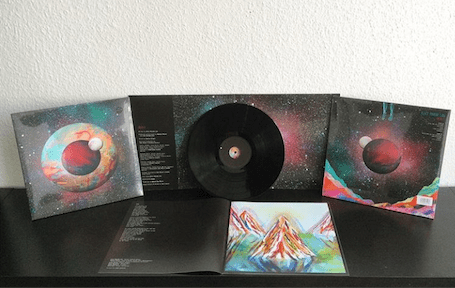
Her website again, compliments her aesthetic. Here, Lou leaves information about upcoming tours, sells merchandise all at a reasonable price for her fanbase as well as CD’s and vinyl. This is in keeping with the resurgence of vinyl. With “4.3m LPs sold” in 2019 (bpi, 2020), consumers seek a more tangible experience, sense of ownership and nostalgia.
Lou sells her own prints and merchandise herself after her gigs which is an opportunity for PR and getting to know her fans personally.
Lou has a sufficient 82,521 followers on Facebook. This mainly consists of repeated content from her Instagram page and shared videos from her YouTube channel creating a sense of familiarity amongst her platforms. A strength of this site is the option to share full length YouTube videos and live streams whereas Instagram only allows for shorter videos.
Her music is available on several sites including Spotify, Apple Music, Amazon Music and Google Play allowing for more opportunities to sell her music. The sacrifice of generating little revenue from sites such as Spotify and SoundCloud is justifiable as it expands her audience, views and immersion into the music industry. Lou’s music is included in Spotify playlists; this form of gatekeeping directs new listeners to an artist but allows them a sense of self-discovery when they find her music creating a bigger fan-base who will in time buy her music or attend gigs. Lou now has 405, 134 monthly listens on Spotify.
Conclusion
To conclude, an unsigned band or artist should first gain experience in their genre, instrument and performance by gigging or busking as well as creating a sense of who they are as an act. This could be a visual identity or USP. The act must also create a fanbase utilising PR either through social media platforms or via word of mouth. All social media should accurately represent the act and their music and be a point of contact between themselves and their fans.
All the act’s music, gig tickets and merchandise should be available to download, stream or buy and should be promoted utilising the 4P’s of marketing via their social media platforms. Once the act has an adequate fanbase, they may be signed to a label and acquire radio play which are both essential for maximum exposure in the music industry.
Bibliography
- Alice Phoebe Lou, 2020. ‘Alice Phoebe Lou – Paper Castles – a documentary’. YouTube. [Online]. https://www.youtube.com/watch?v=LkM-7L5cocQ . [accessed 14th May 2020]
- bpi, 2020. ‘Streaming breaks the 100 billion barrier, fuelled by exciting new talent’. bpi. [Online]. https://www.bpi.co.uk/news-analysis/streaming-breaks-the-100-billion-barrier-fuelled-by-exciting-new-talent/. [accessed 14th May 2020]
- Cappell, T. 2013. ‘Collage of Digital (Social) Networks’. [Online]. https://www.flickr.com/photos/frauhoelle/8464661409. [accessed 14th May 2020]
- Mahogany, 2019. ‘Alice Phoebe Lou in A Place of My Own | The Mahogany Session EP’. YouTube. [Online]. https://www.youtube.com/watch?v=WNkHdM02gNQ&t=1202s . [accessed 14th May 2020]
- Majestic Casual, 2019. ‘Alice Phoebe Lou – Galaxies (feat. Maisie Williams) | Majestic Sessions’ YouTube. [Online]. https://www.youtube.com/watch?v=jbIhfuyWLRA . [accessed 14th May 2020]
- Professional Academy, ‘MARKETING THEORIES – THE MARKETING MIX – FROM 4 PS TO 7 PS’ . [Online]. https://www.professionalacademy.com/blogs-and-advice/marketing-theories—the-marketing-mix—from-4-p-s-to-7-p-s . [accessed 12th May 2020]
- Resnikoff, P.2016. ‘Two-Thirds of All Music Sold Comes from Just 3 Companies’. [Online]. https://www.digitalmusicnews.com/2016/08/03/two-thirds-music-sales-come-three-major-labels/. [accessed 12th May 2020]
- Rogers, J. 2013. ‘The Death & Life of the Music Industry in the Digital Age’, Bloomsbury, United States of America
- Whitby, W. 2019. ‘IFPI reveals recorded music industry now worth £14.6bn as UK becomes the globe’s third largest market’. [Online]. https://www.getintothis.co.uk/2019/07/ifpi-reveals-recorded-music-industry-now-worth-14-6bn-as-uk-becomes-the-globes-third-largest-market/. [accessed 12th May 2020]
- Wynne, R. 2016. ‘Five Things Everyone Should Know About Public Relations’. [Online]. https://www.forbes.com/sites/robertwynne/2016/01/21/five-things-everyone-should-know-about-public-relations/#ed258c42a2c1 . [accessed 12th May 2020]

 Alice music